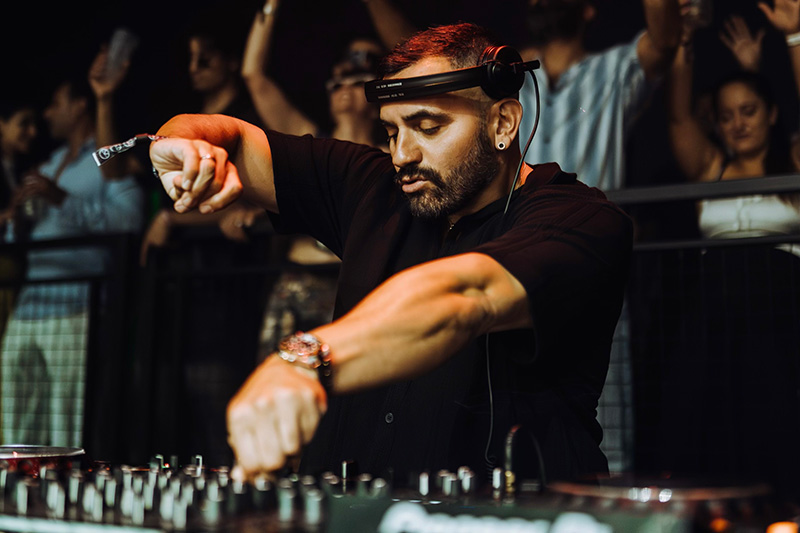
CENKK on Intention, Momentum and His New Two-Track Release on Moodyverse
Straddling the space between classical discipline and club-driven energy, CENKK has been carving out a sound that feels both deliberate and instinctive. His two latest tracks, just released on Moodyverse, lean into that balance with a sharply focused yet emotionally expansive approach – one rooted in playful, peak-time pressure, the other unfolding with cinematic scale and rhythmic detail. Drawing on years of DJ experience, formal musical training, and a deep understanding of dancefloor dynamics, CENKK approaches production as an exercise in tension, timing, and intention. We caught up with him to talk about the ideas behind the release, how flow and momentum shape his writing process, and why environment, testing music in clubs, and listening closely to audiences remain central to his artistic evolution.
This release feels very focused and intentional. What was the starting point for these tracks, and how did the idea develop from first sketches to finished recordings?
I’ve always enjoyed the work of producers like Green Velvet and Bart Skils. That fun aspect of tech-house and peak-time techno was the starting point for Freaky People. I wanted to bring something fun, funky, and a bit dark. It’s a track I didn’t really revisit or overwork after producing it. In Rio came from the idea of combining Brazilian percussion and vocals with a classical, cinematic sound. I’ve always imagined Rio as larger than life, and I wanted the track to feel like more than just drums, bass, and vocals.
There is a strong sense of movement and progression across Freaky People. How do you think about flow and momentum when building a piece of music?
Flow is something you can consciously build, but momentum often happens without overthinking it. There are clear sections in Freaky People where I aim for “wow” moments, with synths creating a kind of pyrotechnic effect. Starting with a progressive structure, the flow comes quite naturally, I just have to make sure the breaks really grab the listener and don’t leave them wondering when the beat will return.
The tracks balance restraint and release in an interesting way. How do you decide when to hold back and when to let elements fully open up?
As a producer, you have to tease the listener until the right moment arrives to take things to the next level. Sometimes I go for one major peak in a track; other times I’ll give them a couple. It really comes down to an artistic decision in the moment.
How much does place or environment influence your writing, whether it’s a specific location, a memory from a rave, or a particular feeling connected to it?
I’ve been lucky to produce a lot this year, and I think that’s largely because I’m happy in my home studio. I’m always influenced by moments in my life or by what’s happening in the world. When I wrote my previous release, for example, I was strongly affected by the political climate and the growing polarisation between people.
As a DJ, how does your experience behind the decks shape the way you write and structure your own tracks, especially in terms of tension, pacing, and release?
It’s extremely important to test your tracks and pay close attention to what really works on the dancefloor. That feedback is a goldmine for producers, it helps us refine our music and make it more effective. That said, not all crowds are the same; a track that works perfectly in one set might not land the same way in another.
You’ve played many very different shows across London this year. How do the city’s diverse venues and crowds influence the way you approach your sets and connect with the audience?
That’s definitely true, especially this year. Each venue has its own following, and some spaces naturally lend themselves to certain vibes. E1, for example, has a more underground feel, while KOKO has a funkier, more lush atmosphere. I’ve definitely adjusted my sets accordingly, sometimes moving from indie dance all the way to peak-time techno.
Looking ahead, are there any new ideas, concepts, or directions you’re keen to explore, either in the studio or in how you present your music to audiences?
I have a few exciting collaborations coming up alongside my solo work. Beyond producing, I’m also working on CORE, an art and sound event where I aim to uplift local talent and provide a platform for women and queer artists.