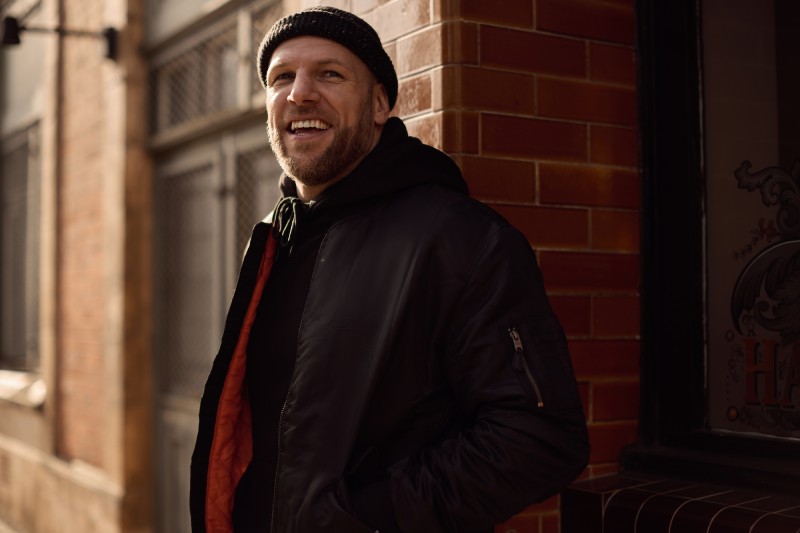
HASKELL links with Silque for his debut on Stereohype, landing with a track that wastes no time establishing intent. The Heat arrives as a dense, high-impact club record, built around industrial-leaning synth work, driving low-end pressure and a level of tension that holds steady from the first bar through to the last.
For HASKELL, the release builds on a run that has seen him move across labels including The Myth of NYX, Nervous Records and Toolroom Records, while sharing lineups and gaining support from names such as Carl Cox, Mark Knight and Gene Farris. With BBC Radio 1 backing already behind him and a steady presence in clubs, he’s been building a catalogue that leans on consistency and clear direction.
The move to Stereohype feels like a natural fit. The label has built its reputation on records that land with authority in club settings, and The Heat sits comfortably in that space while still carrying HASKELL’s distinct approach to tension and structure. With the single out now, we caught up with HASKELL for a chat.
How did your relationship with electronic music actually start, and what pulled you into making your own tracks rather than just playing them?
My relationship with music really started through going to places like Vegas and Ibiza. I became a proper fan of DJs, the shows they put on, the energy they create and the way music can completely change a room. I have always loved performing. In my other life I have performed in front of huge crowds, so that side of it felt natural to me. I also loved the technology behind DJing. That fascinated me. I started with a DJ course, which took me about six months, and from there I realised that if I wanted to be taken seriously and get the sets I wanted, I had to make my own music. So I did production courses, started learning how records were built, and that was really where the journey began.
When you’re in the studio, do you usually start with a clear idea, or are you more someone who builds things up from messing around and seeing what sticks?
I always start with a clear idea. That might be a vocal I have found, a specific reference track, a groove, a feeling, or a sound I want to build around. I like having references because they keep me focused. Otherwise, it is very easy to get distracted and disappear down rabbit holes. For me, the most enjoyable part is the idea stage: building the groove, finding the energy, getting the track to a place where it feels exciting. The frustrating part is often what happens afterwards: getting records signed, dealing with labels, waiting for people to respond, and dealing with the slightly chaotic, laissez faire nature of the music industry. I enjoy making the music far more than the politics around releasing it.
What part of the process do you find the most frustrating, and what part still feels exciting every time you sit down to make something?
I love the creative side. I love the moment when an idea starts working and you can feel the record coming together. The bit that interests me less is the final mastering and the tiny technical details at the end. I respect it, and I know how important it is, but that is not really my lane. I am more interested in the idea, the vibe and the impact of the record. For me, every track you make is like buying a lottery ticket. You do the work, you put it out there, and you see whether it connects.
How much does DJing feed into your production at the moment? Are you writing with specific moments in your sets in mind?
DJing massively feeds into my production. When I make a track, I am always thinking about where it would sit in my set. Is it an opener? Is it a peak-time weapon? Is it something for a darker moment? What kind of crowd is going to react to it? I also listen to what other DJs are doing, how they build tension, how they create moments, and how their records work in clubs. That all feeds back into what I want to make.
When you listen back to your older releases now, what stands out to you the most? Is there anything you’d approach differently today?
When I listen back to my early releases, I am proud of them. They were credible records and they did well, but they were not really my sound. Some of them were more piano house, a bit softer, and that is not really where my personality sits. Over time, I have naturally moved much more towards tech house, darker grooves and more underground club records. That suits me far more as a person and as a DJ.
You’ve been getting more support from bigger names recently. Has that changed your confidence in the studio at all, or do you try to block that out?
It is always amazing when bigger DJs play your music. It gives you confidence and a bit of affirmation that you are on the right track. But I try not to get carried away. Coming from sport helps with that. You learn very quickly that you are never as good as you think you are, and you are never as bad as you think you are. So I just try to stay present, keep working, stay hungry and keep improving.
Outside of music, what actually influences you day to day? Is there anything non-musical that ends up shaping how your tracks sound?
A lot of things influence me outside of music: my mood, my family, where I am in life, travelling, the countries I am in, even whether the sun is shining. All of that affects what I want to make. Sometimes you want something darker and more driving. Sometimes you want something with a bit more energy or emotion. It depends on the era you are in personally.
What does a typical studio day look like for you when things are flowing properly? Are you quite structured, or does it depend on how you’re feeling that day?
A good studio day starts with references. I listen to tracks I like, find similar records, get clear on the direction, and then I really focus. I am a bit of a workaholic, so once I am locked in, I will sit there and get my head down. I will take a break, come back to it, and keep working until it gets to a point where I am proud of it. Then I will usually sit down with an engineer to finish it properly. Sometimes you come back to an idea and realise it is not right, so you start again. That is just part of the process. Every time you make a track, it is like buying a lottery ticket. You never fully know what will connect, but you have to keep making them.
The Heat is out now on Stereohype
![HASKELL & Silque - The Heat [STEREOHYPE]](https://i.ytimg.com/vi/6s5fgRWPNAE/hqdefault.jpg)