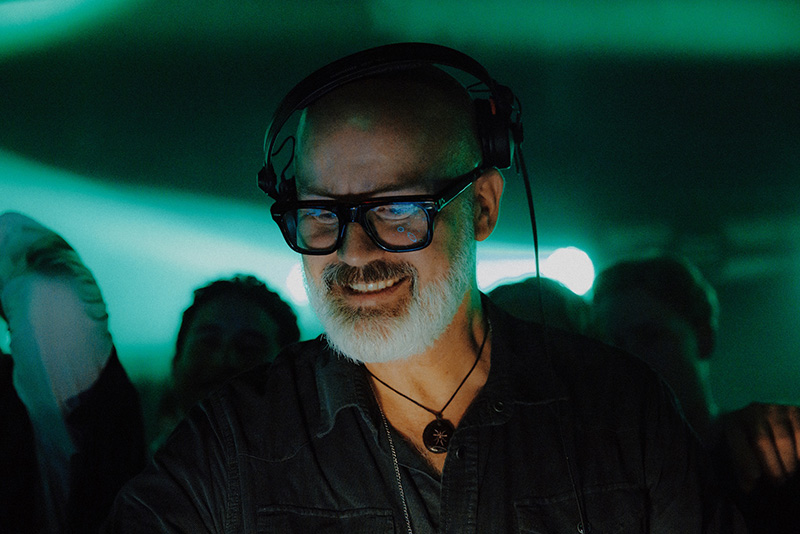
Norwegian producer Simon Field has spent more than a decade carving out a career that comfortably bridges club culture and wider electronic audiences, accumulating hundreds of millions of streams while maintaining a steady connection to the dancefloor.
His latest single, Danger, captures that balance perfectly. Built around a warped spoken-word vocal, unexpected tempo shifts and a playful sense of unpredictability, the track feels designed to keep listeners guessing. We caught up with Simon to discuss creative risk, trusting instinct, the realities of longevity in electronic music, and why taking chances matters more to him now than ever before.
Looking back over your career so far, what do you think has remained most consistent about your approach to making music, even as trends, platforms and audiences have changed around you?
The one thing that has remained constant is my genuine love for music, and house music in particular. Trends come and go, platforms change, algorithms change, but that passion is still the driving force behind everything I do. I’ve always been curious and willing to take creative risks rather than repeat myself. Over the years I’ve become more confident in following instinct instead of chasing trends. I think records like Danger are a direct result of that mindset. They’re built around the excitement of creating something that feels fresh, surprising and fun, while still serving the dancefloor.
You’ve accumulated hundreds of millions of streams while continuing to release club-focused music. Do you approach records differently now than you did ten years ago, or has your creative process remained largely unchanged?
A lot has changed over the last ten years, especially in my mindset. The biggest difference is trust. I trust my instincts far more today than I did earlier in my career. One thing I’ve learned is that volume often creates quality. The more music you write, the more your personality starts to emerge naturally. Instead of overthinking every decision, I’ve learned to work faster and capture ideas while they’re still exciting. Ironically, the less I try to sound like something, the more I end up sounding like myself.
Danger feels like a record that doesn’t immediately reveal everything about itself. Are you comfortable with the idea that some listeners might not “get it” straight away, or do you think the best dance records need an element of instant accessibility?
Absolutely. Not every record has to reveal itself in the first fifteen seconds. Danger was written around tension, contrast and surprise. It’s a record built for a club environment where the full journey matters. Some records are instant; others unfold over time. I think the most memorable dance records often have both qualities. The reality is that club music is experienced differently on a big sound system surrounded by people. That’s where Danger really comes alive. The reactions I’ve seen when playing it in packed clubs have confirmed exactly what I hoped the record would do.
You’ve released music across a wide range of labels, from underground dance imprints to major companies. What have you learned about protecting your artistic identity while operating in very different parts of the industry?
I’ve always tried to release music that feels authentic to me, regardless of the label it’s released on. Working with different labels has taught me that the most valuable thing an artist can have is a clear identity. Labels, managers and teams can help amplify what you do, but they can’t create your artistic voice for you. That has to come from the artist. I’ve been fortunate to work with both major labels and underground imprints, but the records that connect the most are usually the ones where I followed my instincts rather than trying to fit a particular market.
Norway isn’t always the first country people associate with house music. How has coming from that environment shaped your perspective as a producer and artist?
It’s funny because from the inside, Norway actually has a very strong electronic music culture. We may not export as many dance acts as some larger countries, but there’s a real appreciation for individuality and musical quality here. What I’ve always loved about the Norwegian scene is that audiences genuinely come for the music. Whether it’s a small underground club or a larger event, people appreciate artists who bring something personal to the table. That freedom has allowed me to develop my own sound rather than feeling pressure to follow a specific trend.
The title Danger suggests risk, unpredictability and perhaps a degree of recklessness. Was that theme present from the start of the writing process, or did it emerge as the track developed? It was there from the beginning. I’ve always loved spoken-word vocals, and recently I’ve been experimenting with tempo shifts and unexpected transitions in my DJ sets. The original idea was to combine those elements into a track that could genuinely surprise people on a dancefloor. I probably made ten different versions before arriving at the final one. I tested it repeatedly in clubs, paying close attention to how people reacted. The final version is really the result of that process of experimentation and refinement.
You’ve built a catalogue that’s both prolific and varied. When you’re sitting down to start a new track, how do you avoid repeating yourself while still sounding recognisably like Simon Field? For me, it’s about working quickly enough to stay ahead of self-doubt. If I spend too much time analysing an idea, I often lose the excitement that made it interesting in the first place. The best ideas usually come from instinct. I try to follow the groove, the emotion and the energy before my analytical brain starts interfering. At the same time, every producer develops certain habits, sounds and production values over time. Those things naturally become part of your signature, even when you’re exploring new territory.
Many producers talk about finding their sound. Do you feel you’ve found yours, or do you think an artist should always be slightly dissatisfied and searching for something new?
I think artists have a responsibility to keep pushing forward. Finding your sound is important, but becoming too comfortable can be dangerous creatively. The music that excites me most is usually made by artists who continue to evolve while still remaining recognisable. So yes, I think there should always be a little bit of healthy dissatisfaction. Maybe we’re all chasing that perfect track we’ll never quite finish.
Dance music often rewards consistency, but Danger feels like a record that’s willing to take a few chances. At this stage of your career, do you feel more freedom to experiment than you did earlier on, or less? Much more freedom. Earlier in my career I probably worried more about expectations, whether from labels, audiences or even myself. Today I’m much more interested in creating memorable moments than fitting into a formula. The records that stand out are usually the ones that take a chance. If you’re trying to create something unique, experimentation becomes part of the process. That’s probably why I feel more creatively free today than at any other point in my career.
If someone had never heard a Simon Field record before and Danger was their introduction, what would you hope they understood about you as an artist after listening to it?
I’d hope they understood that I make music for people, not algorithms. I’d want them to smile, feel something unexpected, and immediately imagine hearing the track on a big sound system. Most of all, I’d hope they’d recognise that I don’t take myself too seriously, but I take the dancefloor very seriously. If Danger makes someone curious enough to explore the rest of my catalogue, then it’s done its job.
Danger is out now on Basement Recordings